Wednesday, 10 May 2023

SearchSmart - Compare 80+ academic databases and academic searches by features
 Source: https://library.smu.edu.sg/topics-insights/searchsmart-compare-80-academic-databases-and-academic-searches-features

SearchSmart - Compare 80+ academic databases and academic searches by features

SearchSmart - Compare 80+ academic databases and academic searches by features

By Aaron Tay, Lead, Data Services

There are a dazzling array of academic search engines and databases today differing in both coverage and features.

Whether you are doing exploratory searches with quick and dirty searches or you are carefully planning sources to search for in a systematic review and need search engines that support precision searching it is difficult to keep track of all the systems out there even for an academic librarian like me.
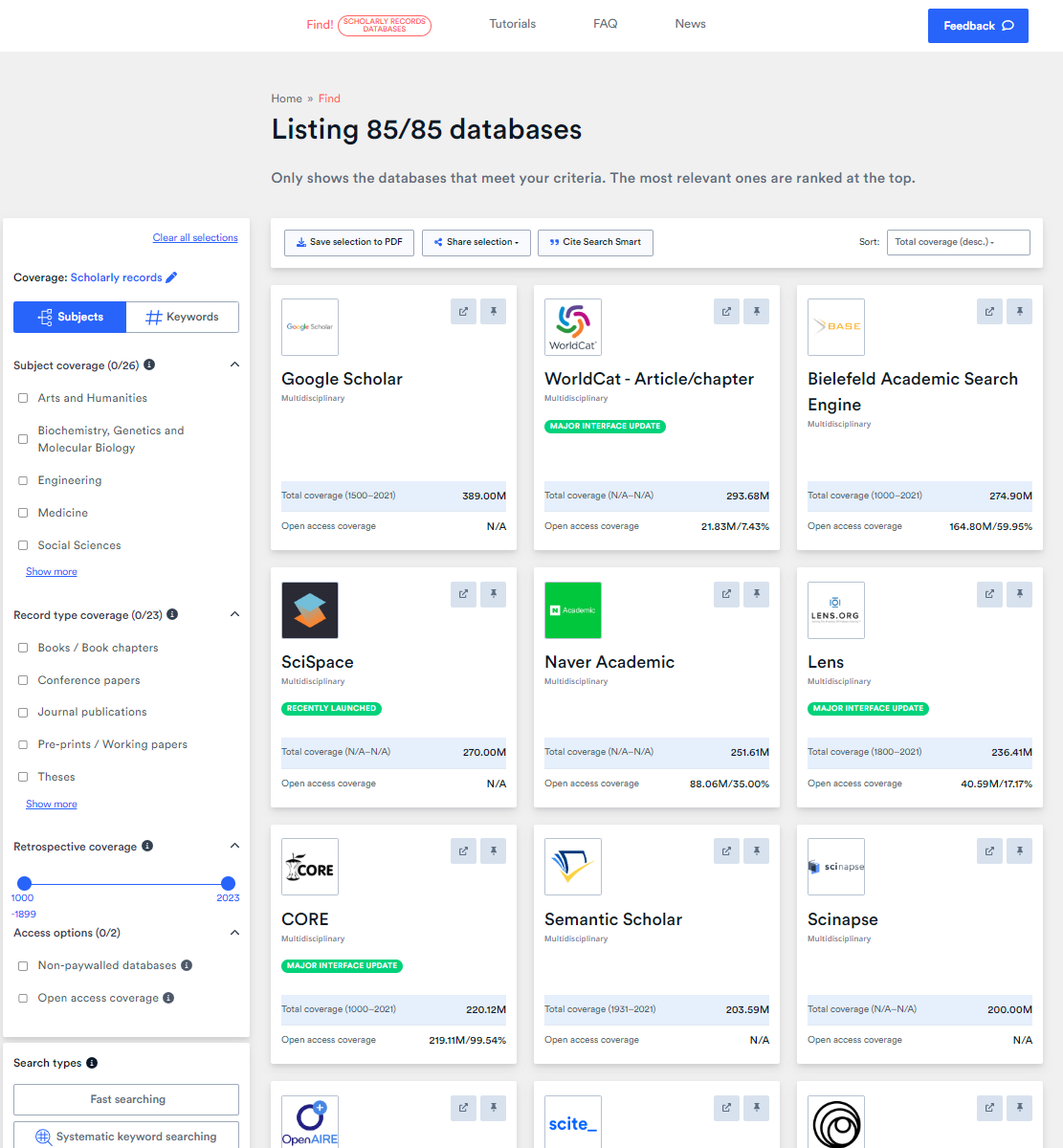
Interface of SmartSearch website

This is where the newly launched SmartSearch site by Michael Gusenbauer comes in handy.

We have covered Gusenbauer’s work before in a past Research Radar under a piece entitled - Knowing where to search. Comparing the absolute and relative subject coverage of 56 databases.

This was a summary of a pair of his papers:

  1. Gusenbauer, M., & Haddaway, N. R. (2020). Which academic search systems are suitable for systematic reviews or meta-analyses? Evaluating retrieval qualities of Google Scholar, PubMed, and 26 other resources. Research synthesis methods, 11(2), 181–217. https://doi.org/10.1002/jrsm.1378
  2. Gusenbauer, M. (2022). Search where you will find most: Comparing the disciplinary coverage of 56 bibliographic databases. Scientometrics, 1-63. https://doi.org/10.1007/s11192-022-04289-7

The first paper listed a comprehensive series of tests on a multitude of features available across academic databases and search engines.

The second more recent paper focused on a unique methodology to estimate the relative and absolute coverage of databases across 26 subject areas (Scopus All Science Journal Classification or ASJC) by sampling from a basket of keywords, a technique that was named “basket of keywords” approach. For a more detailed explanation, see the research radar piece "Knowing where to search. Comparing the absolute and relative subject coverage of 56 databases".

While both papers test the databases extremely rigorously, they were ad hoc one-off tests and the results are dated by now.

SearchSmart which is a website by the author of these two papers aims to correct this issue and is using similar methodologies in both these papers to:

  1. Estimate the size of each database and their relative and absolute size of each subject area
  2. List in a granular method the features of each database

You can use SearchSmart in roughly two different ways.

  1. Look for databases that fit a certain criterion in terms of features or relative subject coverage
  2. Pin up to 6 similar databases for comparison

Look for databases that fit a certain criterion in terms of features or relative subject coverage

Databases / academic search engines distinguish themselves in terms of coverage and features. One obvious thing when considering databases to use is to choose academic databases or search engines that have the highest absolute or relative coverage of your subject area.

To do this, go to the filters and select one of 26 subject areas (from Scopus All Science Journal Classification or ASJC) under subject coverage and select say “Business, Management and Accounting”, then select “Rank databases according to relative subject coverage” at the bottom and compare.
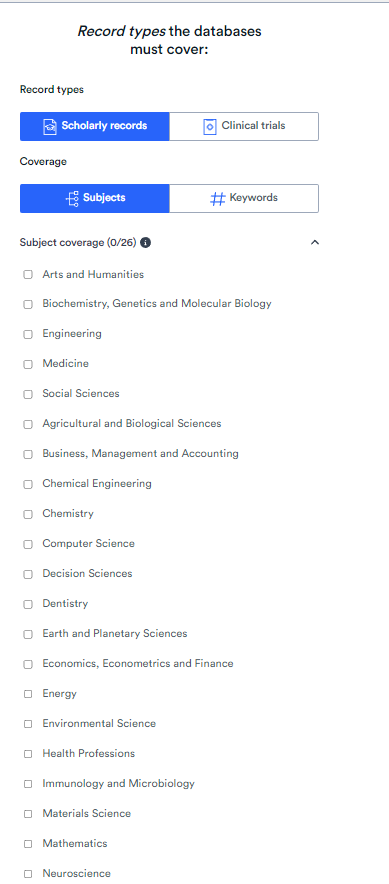
Filter by subject coverage

This gives you the same 85 databases included in smartsearch at time of writing but they are not ordered in terms of relative subject coverage for “Business, Management and Accounting”.

At the time of writing the top databases with the highest relative coverage for that subject are

  1. Emerald Insight – 48.52%
  2. ABI/Inform Global – 26.88%
  3. Business Source Complete (via EBSCOhost) -26.16%

Note this does mean these 3 databases have the absolute largest amounts of content in the subject area, (if you sort by absolute subject coverage you will see it belongs to OCLC WorldCat Journal/Article, Google Scholar, ABI inform) but there are relatively more of such content proportionally given the size of the database. This likely means you will get more relevant and precise results as opposed to using a large database but there is proportionally less business, management and accounting content.

You do not have to stop there of course, there is a huge variety of other filters you can add, such as “Record type coverage” (e.g. Theses), “retrospective coverage” which controls which publication years are covered.

No longer affiliated with a university or academic institution? Check on “Non-paywalled database” to filter down to search interfaces that do not require a subscription to search.
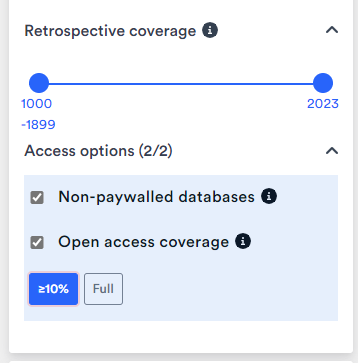
Filter access options: 1) Non-paywalled databases and 2) Open access coverage

Non-paywalled databases only guarantee you can search the database without a subscription but there is no guarantee you can access the full-text.

The “Open Access coverage” filter allows you to filter to databases where either a) >10% of records are open access or b) 100% of records displayed are open access.

Of course, this just scratches the surface of the types of functions you can filter by. Below shows some of the filters and categories they are divided into.
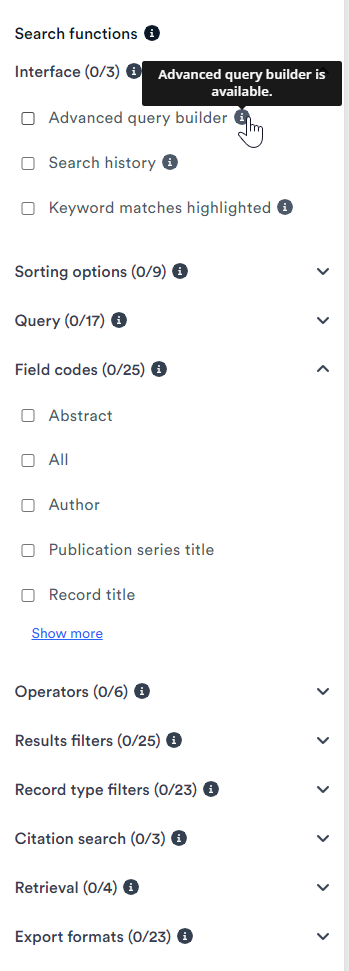
Filters include Interface, Sorting options, Query, Field codes, Operatiorsm Results filters, Record type filters, Citation search, Retrieval and Export formats

Each category of filters is comprehensive and nuanced, allowing you to filter to very specific search details.

For example, the “Operators” category allows you to check which databases allow different Boolean Operators, Proximity Operators, exact match and support nested searches.
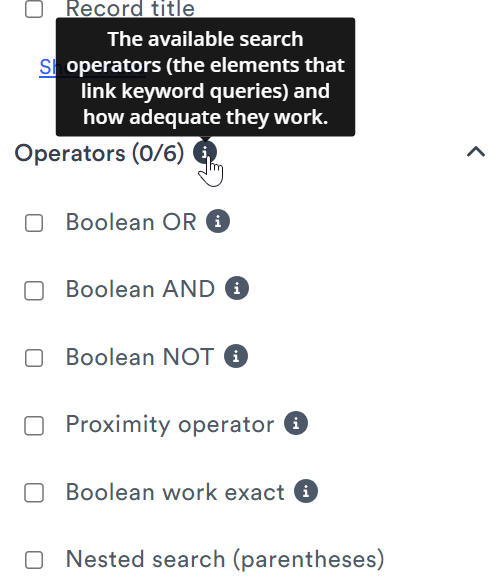
The categories under Operators include Boolean OR, Boolean AND, Boolean NOT, Proximity operator, Boolean work exact and Nested search (parentheses)

The wide variety of filters threatens to confuse but if you need ideas on what filters to use, refer to the tutorial for some canned searches.
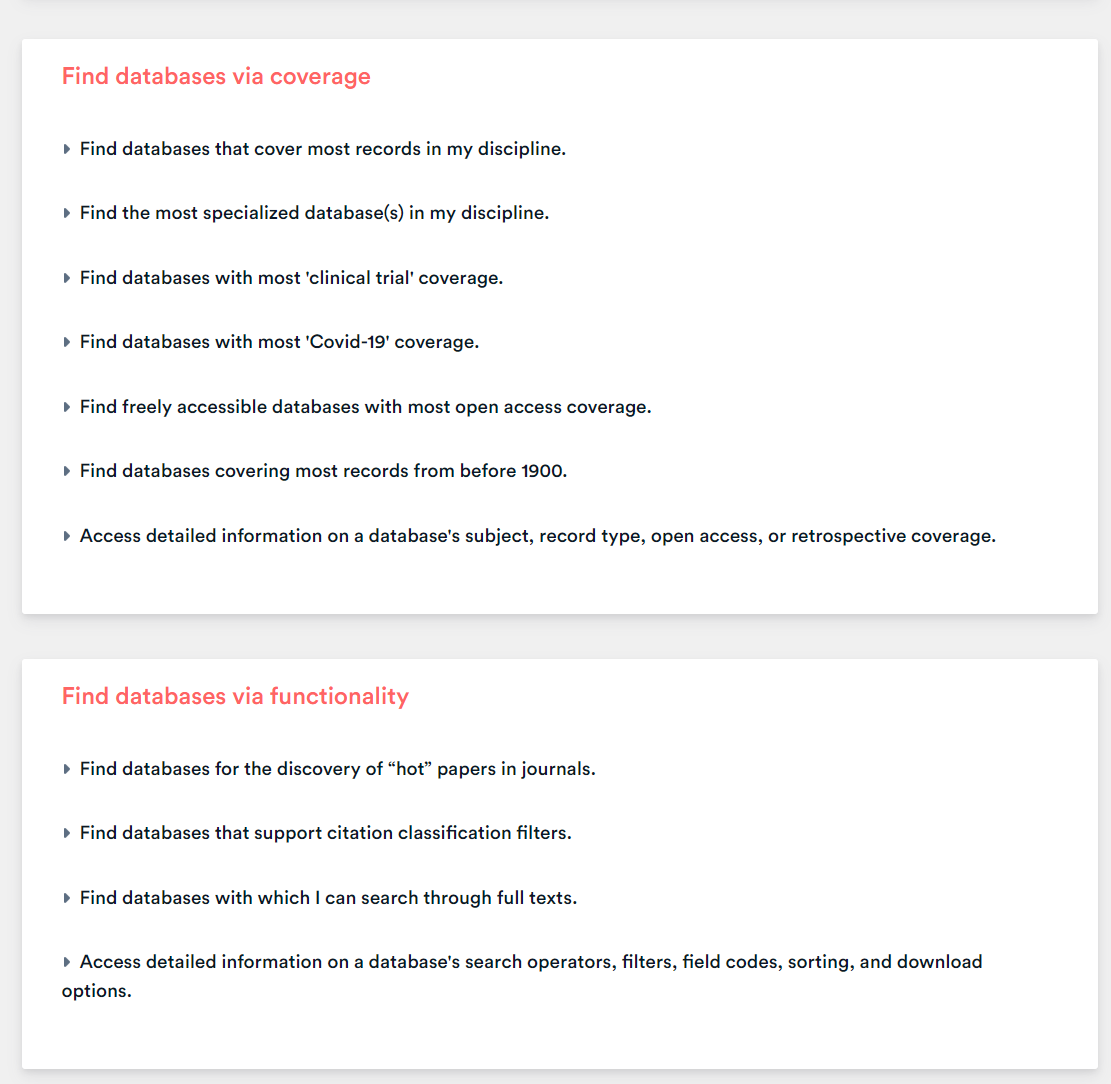
Canned searches for Find databases via coverage include Find databases that cover most records in my discipline, Find the most specialised database(s) in my discipline, Find databases with most 'clinical trial' coverage

Fast searching vs Systematic Keyword searching vs Forward Citation

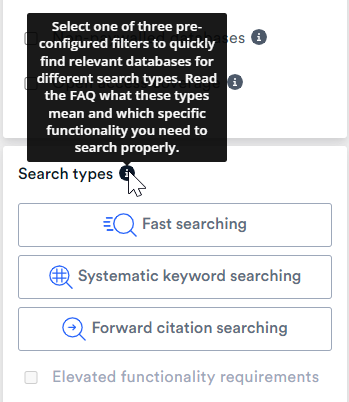
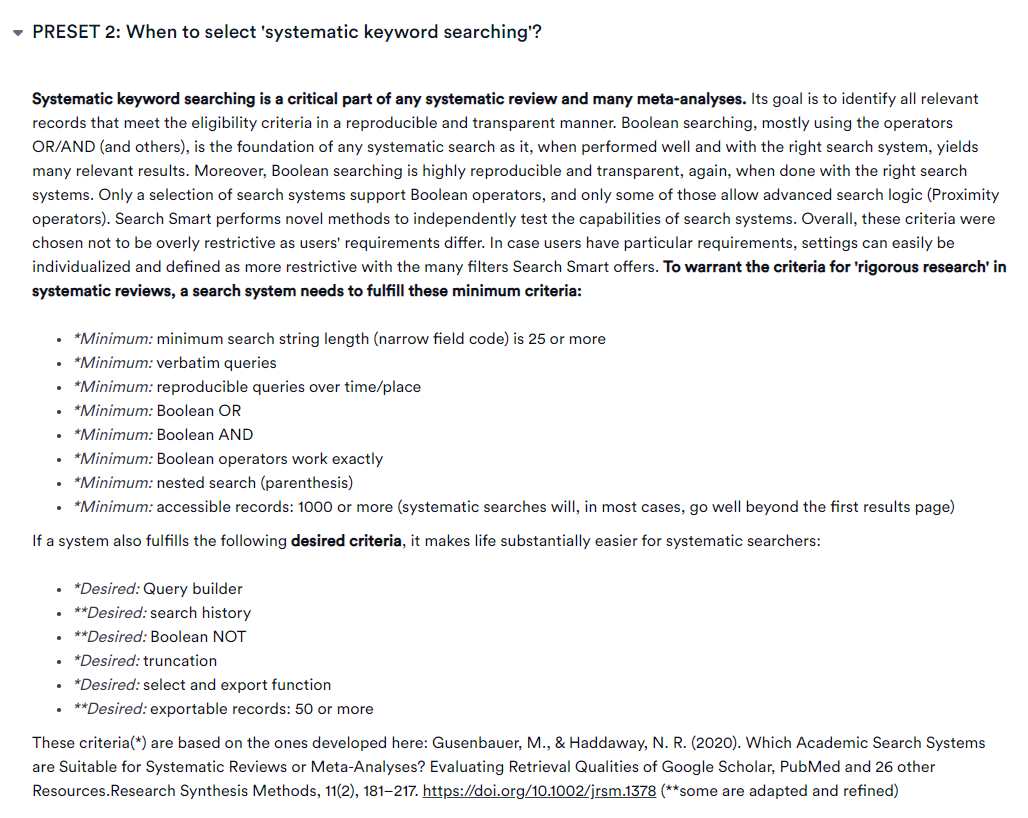
In SearchSmart, there are three pre-configured filters designed to find databases or search engines suitable for:

  1. Fast Searching
  2. Systematic Keyword searching
  3. Forward citation searching.

NA

You can read the FAQ to see what functions the three search types filter. You will not be surprised that the requirements for systematic searching are the highest in terms of the functionality needed to support it.
NA

Pin up to 6 databases for comparison

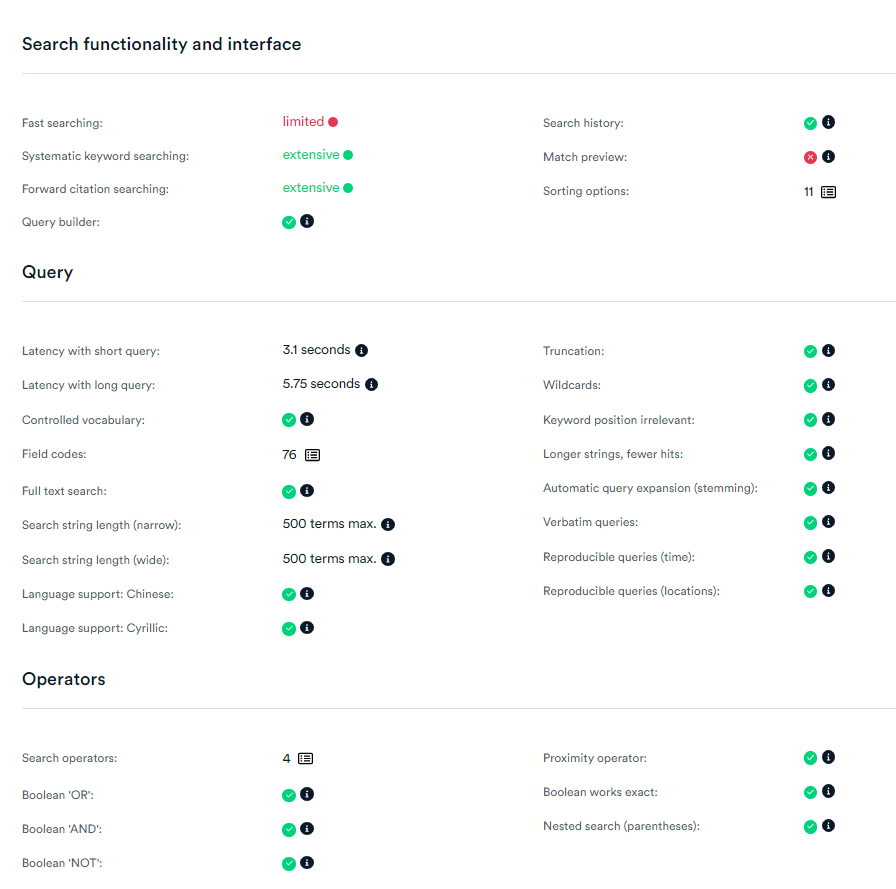
You can look at the full details of every database or search engine, below shows a partial screenshot of the details pages of Lens.org.
NA

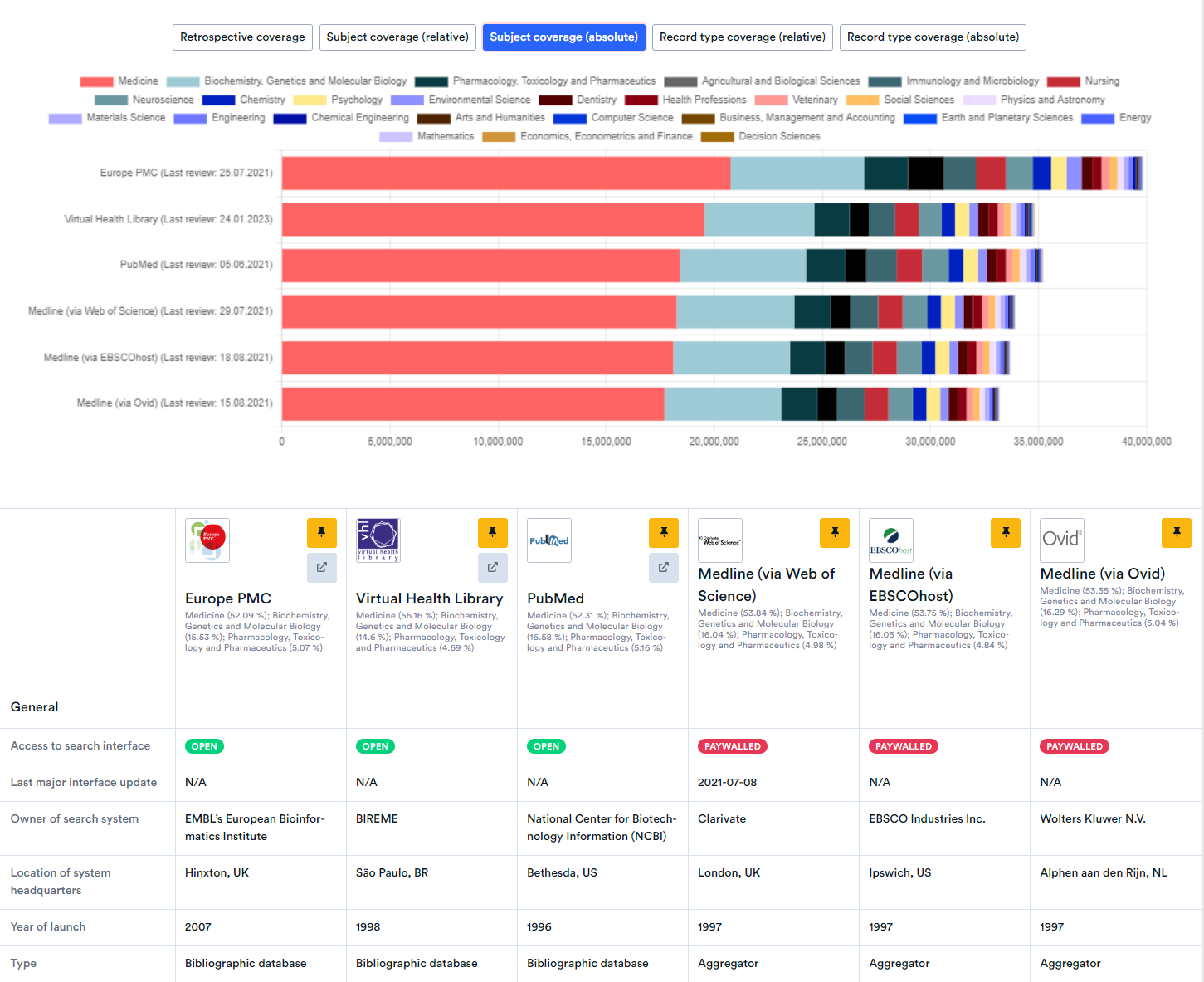
But even better would be to pin up to 6 databases and compare them.

For example, you might want to compare the “same database” (the last two are not exactly just Medline) offered by different search systems by pinning and comparing:

  • Medline (via OVID)
  • Medline (via Ebscohost)
  • Medline (via Web of Science)
  • Europe PMC
  • Virtual Health Library

See query

NA

Conclusion

This is by far the most comprehensive listing and comparison of academic databases and academic search engines I have ever seen. The fact that the site promises to continuously update the details makes this website worth looking into.

This is particularly so for systematic review researchers who are looking to find promising new academic search engines suitable for their research.


Tuesday, 9 May 2023

The best AI tools to power your academic research

 Source: 

The best AI tools to power your academic research

These AI tools could help boost your academic research
These AI tools could help boost your academic research   -  Copyright  Euronews/Canva
By Camille Bello

The future of academia is likely to be transformed by AI language models such as ChatGPT. Here are some other tools worth knowing about.

"ChatGPT will redefine the future of academic research. But most academics don't know how to use it intelligently," Mushtaq Bilal, a postdoctoral researcher at the University of Southern Denmark, recently tweeted.

Academia and artificial intelligence (AI) are becoming increasingly intertwined, and as AI continues to advance, it is likely that academics will continue to either embrace its potential or voice concerns about its risks.

"There are two camps in academia. The first is the early adopters of artificial intelligence, and the second is the professors and academics who think AI corrupts academic integrity," Bilal told Euronews Next.

He places himself firmly in the first camp. 

The Pakistani-born and Denmark-based professor believes that if used thoughtfully, AI language models could help democratise education and even give way to more knowledge.

Many experts have pointed out that the accuracy and quality of the output produced by language models such as ChatGPT are not trustworthy. The generated text can sometimes be biased, limited or inaccurate.

But Bilal says that understanding those limitations, paired with the right approach, can make language models “do a lot of quality labour for you,” notably for academia.

Incremental prompting to create a 'structure'

To create an academia-worthy structure, Bilal says it is fundamental to master incremental prompting, a technique traditionally used in behavioural therapy and special education.

It involves breaking down complex tasks into smaller, more manageable steps and providing prompts or cues to help the individual complete each one successfully. The prompts then gradually become more complicated.

In behavioural therapy, incremental prompting allows individuals to build their sense of confidence. In language models, it allows for “way more sophisticated answers”.

In a Twitter thread, Bilal showed how he managed to get ChatGPT to provide a “brilliant outline” for a journal article using incremental prompting.

In his demonstration, Bilal started by asking ChatGPT about specific concepts relevant to his work, then about authors and their ideas, guiding the AI-driven chatbot through the contextual knowledge pertinent to his essay.

“Now that ChatGPT has a fair idea about my project, I ask it to create an outline for a journal article,” he explained, before declaring the results he obtained would likely save him “20 hours of labour”.

“If I just wrote a paragraph for every point in the outline, I'd have a decent first draft of my article”.

Incremental prompting also allows ChatGPT and other AI models to help when it comes to "making education more democratic," Bilal said.

Some people have the luxury of discussing with Harvard or Oxford professors potential academic outlines or angles for scientific papers, "but not everyone does," he explained.

"If I were in Pakistan, I would not have access to Harvard professors but I would still need to brainstorm ideas. So instead, I could use AI apps to have an intelligent conversation and help me formulate my research".

Bilal recently made ChatGPT think and talk like a Stanford professor. Then, to fact-check how authentic the output was, he asked the same questions to a real-life Stanford professor. The results were astonishing.

ChatGPT is only one of the many AI-powered apps you can use for academic writing, or to mimic conversations with renowned academics.

Here are other AI-driven software to help your academic efforts, handpicked by Bilal.

1. Consensus

In Bilal’s words: “If ChatGPT and Google Scholar got married, their child would be Consensus — an AI-powered search engine”.

Consensus looks like most search engines but what sets it apart is that you ask Yes/No questions, to which it provides answers with the consensus of the academic community.

Users can also ask Consensus about the relationship between concepts and about something’s cause and effect. For example: Does immigration improve the economy?

Consensus would reply to that question by stating that most studies have found that immigration generally improves the economy, while also providing a list of the academic papers it used to arrive at the consensus, and ultimately sharing the summaries of the top articles it analysed.

The AI-powered search engine is only equipped to respond on six topics: economics, sleep, social policy, medicine, and mental health and health supplements.

2. Elicit.org

Elicit, "the AI research assistant" according to its founders, also uses language models to answer questions, but its knowledge is solely based on research, enabling "intelligent conversations" and brainstorming with a very knowledgeable and verified source.

The software can also find relevant papers without perfect keyword matches, summarise them and extract key information.

3. Scite.ai

Although language models like ChatGPT are not designed to intentionally deceive, it has been proven they can generate text that is not based on factual information, and include fake citations to papers that don't exist.

But there is an AI-powered app that gives you real citations to actually published papers - Scite.

“This is one of my favourite ones to improve workflows,” said Bilal.

Similar to Elicit, upon being asked a question, Scite delivers answers with a detailed list of all the papers cited in the response.

“Also, if I make a claim and that claim has been refuted or corroborated by various people or various journals, Scite gives me the exact number. So this is really very, very powerful”.

“If I were to teach any seminar on writing, I would teach how to use this app”.

4. Research Rabbit

“Research Rabbit is an incredible tool that FAST-TRACKS your research. Best part: it's FREE. But most academics don't know about it,” tweeted Bilal.

Called by its founders "the Spotify of research," Research Rabbit allows adding academic papers to "collections".

These collections allow the software to learn about the user’s interests, prompting new relevant recommendations.

Research Rabbit also allows visualising the scholarly network of papers and co-authorships in graphs, so that users can follow the work of a single topic or author and dive deeper into their research.

  1. ChatPDF

ChatPDF is an AI-powered app that makes reading and analysing journal articles easier and faster.

“It's like ChatGPT, but for research papers,” said Bilal.

Users start by uploading the research paper PDF into the AI software and then start asking it questions.

The app then prepares a short summary of the paper and provides the user with examples of questions that it could answer based on the full article.

What promise does AI hold for the future of research?

The development of AI will be as fundamental “as the creation of the microprocessor, the personal computer, the Internet, and the mobile phone,” wrote Bill Gates in the latest post on his personal blog, titled ‘The Age of AI Has Begun’.

“Computers haven’t had the effect on education that many of us in the industry have hoped,” he wrote. 

"But I think in the next five to 10 years, AI-driven software will finally deliver on the promise of revolutionising the way people teach and learn”.

The State of Scholarly Metadata: 2023

 Source: https://scholarlykitchen.sspnet.org/2023/05/09/the-state-of-scholarly-metadata-2023/ and https://www.copyright.com/stateofmetadata/

The State of Scholarly Metadata: 2023

Editor’s Note: Today’s post is by Jamie Carmichael, Jessica Thibodeau, and Chef Roy Kaufman. Jamie brings nearly 20 years’ experience in publishing to her current role as Senior Director, Information & Content Solutions at CCC. Jessica is Senior Director, Information and Content Solutions at CCC, responsible for the strategic direction of CCC’s Ringgold portfolio and go-to-market efforts for products and services across the scholarly publishing ecosystem.

As scholarly communication rapidly adapts to seismic shifts in open science, technology, and culture, a renewed focus has emerged on metadata and persistent identifiers (PIDs) — about people, places, and objects — as an essential component of a vibrant industry. At the US policy level alone, leveraging metadata to accelerate industry transformation is a common theme across the Nelson Memo and recent Requests for Information from the NIH and the Department of Transportation.

Scholarly research is complex and interconnected; change in one area can spark improvement or deterioration throughout the ecosystem. By way of example, consider the role of PIDs in open access (OA) funding entitlements. OA management platforms rely on metadata elements, particularly organizational PIDs passed from upstream submission and peer review systems, to automate the process of matching manuscripts with potential funding sources. This typically happens at article acceptance, and increasingly at submission, eliminating manual administration for authors as well as supporting publishers, institutions, consortia, and funders in achieving OA at scale.

In order to perform a health check on organizational IDs, in 2021, we reviewed cross-publisher records of institutional affiliation and/or funder data in our OA workflow tool, RightsLink for Scientific Communications. We discovered that 82% of accepted manuscripts included such data, which was an improvement over prior years. However, these statistics masked an ugly truth; namely that in many cases those manuscripts used institutional email domains as a proxy for funding or discount eligibility instead of a PID. And within the 18% that carried no PID, missed funding opportunities created unnecessary work (and payments) for authors, institutions, and publishers to reconcile retroactively.

Even if CCC — either alone, or with its partners and publishers — were able to close these metadata gaps at acceptance of manuscripts, this is late in the process and advantages of PIDs earlier in the research lifecycle would be lost. Solving for metadata gaps would be more effective in upstream systems of record so the tail doesn’t wag the dog. This is precisely why we’ve encouraged the NIH to consider the grant application process as an early opportunity to mandate PIDs and cascade to other systems underpinning the research lifecycle, for example, Current Research Information Systems (CRISs).

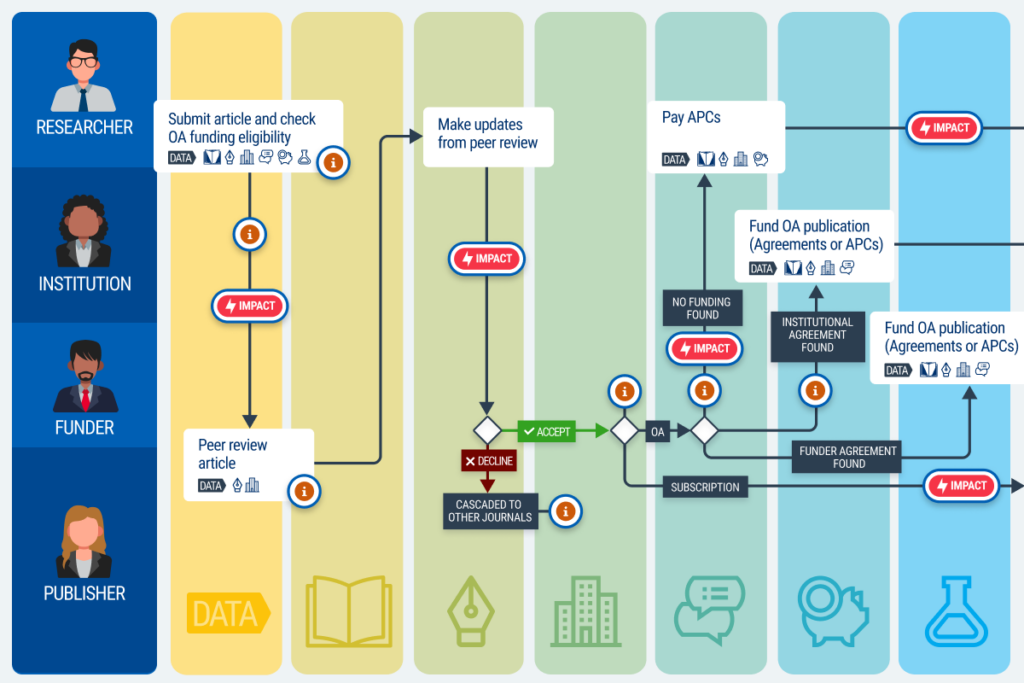
But where to start? Let’s face it, PIDs are a wonky topic and we need to communicate to people who are not naturally interested in the intricacies of, e.g., ISNI and Ringgold. But these people will care if they know that lack of PIDs can lead to lack of funding. In order to break this down, we recently talked with dozens of stakeholders and mapped a range of metadata challenges through an OA lens. We built on an existing body of work to visualize the ripple effect of a fragmented metadata supply chain. The result is an interactive report of the research lifecycle designed to offer everyone a deeper understanding of the state of scholarly metadata in 2023. Though the issues are numerous, they are not insurmountable, and much infrastructure exists to support change.

About the State of Scholarly Metadata: 2023

Working with Media Growth Strategies, we interviewed representatives from institutions, publishers, funders, researchers, service providers, PID providers, and industry associations to capture a broad view of the current state of metadata and PIDs across the ecosystem. We asked questions such as:

  • Who should create and maintain metadata? Where should it originate?
  • What resources do you invest to create, curate, or maintain various types of metadata?
  • What are your biggest challenges when it comes to metadata management and/or use of PIDs?
  • What are the most critical metadata elements?
  • What’s at stake if these elements don’t persist through scholarly communications?
  • Who should own metadata quality and control?
workflow diagram from the report
The State of Scholarly Metadata: 2023 visual report depicts economic and social impact of the fragmented metadata supply chain across the ecosystem.

Here is what they said about the costly implications of metadata breakages and complexities across the research lifecycle:

  • Researchers: There was overwhelming consensus among stakeholders that researchers shoulder a significant administrative burden to assert or re-assert data (e.g., institution affiliation, funder ID), ultimately disrupting and delaying scientific discovery.
  • Institutions: Because of metadata inconsistencies throughout the research lifecycle, institutions deploy labor-intensive workarounds to manually reconcile funding eligibility and APC billing, as well as normalize unstructured data across disparate systems for comprehensive analysis.
  • Funders: Missing metadata (e.g., registered grant DOIs, institution affiliation) makes it difficult and costly to link funding to research outputs, presenting potential barriers to open access uptake, problematic impact tracking, and incomplete analysis to inform future investments.
  • Publishers: Metadata breakages interfere with business transformation initiatives, contributing to high operational and opportunity costs and complicating fulfillment of open access agreement terms and analysis of deal performance to inform future decisions.

Many stakeholders we interviewed recognize that new metadata strategies, inclusive policies, and a robust framework of interoperable systems are essential for modernizing this element of scholarly communications. It’s also clear that an ecosystem-wide commitment to improving data quality across all groups will facilitate the transition to open while helping to preserve research integrity, expand discoverability, and improve impact measurement. If the industry works collectively to shrink these gaps by reexamining metadata policy and practice, stakeholders will undoubtedly feel less pain. Or, we can continue the current system of entropy, friction, and frustration. Together, we can decide our path.

Jamie Carmichael

Jamie Carmichael brings nearly 20 years’ experience in publishing to her current role as Senior Director, Information & Content Solutions at CCC. In this position, she owns go-to-market strategy for the company’s open scholarly communications portfolio.

Jessica Thibodeau

Jessica Thibodeau is Senior Director, Information and Content Solutions at CCC, responsible for the strategic direction of CCC’s Ringgold portfolio and go-to-market efforts for products and services across the scholarly publishing ecosystem.

Roy Kaufman

Roy Kaufman

Roy Kaufman is Managing Director of both Business Development and Government Relations for the Copyright Clearance Center (CCC). Prior to CCC, Kaufman served as Legal Director, John Wiley and Sons, Inc. He is a member of, among other things, the Bar of the State of New York, the Author’s Guild, and the editorial board of UKSG Insights. Kaufman also advises the US Government on international trade matters through membership in International Trade Advisory Committee (ITAC) 13 – Intellectual Property and the Library of Congress’s Copyright Public Modernization Committee in addition to serving on the Board of the United States Intellectual Property Alliance (USIPA).

Monday, 8 May 2023

Article that assessed MDPI journals as “predatory” retracted and replaced

 Source: https://retractionwatch.com/2023/05/08/article-that-assessed-mdpi-journals-as-predatory-retracted-and-replaced/

Article that assessed MDPI journals as “predatory” retracted and replaced

A 2021 article that found journals from the open-access publisher MDPI had characteristics of predatory journals has been retracted and replaced with a version that softens its conclusions about the company. MDPI is still not satisfied, however. 

The article, “Journal citation reports and the definition of a predatory journal: The case of the Multidisciplinary Digital Publishing Institute (MDPI),” was published in Research Evaluation. It has been cited 20 times, according to Clarivate’s Web of Science. 

María de los Ángeles Oviedo García, a professor of business administration and marketing at the University of Seville in Spain, and the paper’s sole author, analyzed 53 MDPI journals that were included in Clarivate’s 2018 Journal Citation Reports. 

Oviedo García assessed each journal by eight criteria associated with predatory publications, including self-citation. She also compared the MDPI journals to the journals with the highest impact factor in their subject category. The original abstract described her findings like this: 

The formal criteria together with the analysis of the citation patterns of the 53 journals under analysis all singled them out as predatory journals. 

Soon after the paper was published in July 2021, MDPI issued a “comment” about the article that responded to Oviedo García’s analysis point by point. The comment called out “the misrepresentation of MDPI, as well as concerns around the accuracy of the data and validity of the research methodology.”

In September 2021, Research Evaluation published an expression of concern about the article that stated: 

The journal and publisher have been alerted to concerns about this article, and an investigation is in progress. In the interim, we alert readers that these concerns have been raised.

The article was retracted and replaced with a revised version earlier this month. The notice, which is labeled as a “correction,” stated that the replacement addressed:

concerns about conclusions drawn in the article. The conclusions in the updated article are reached based on cited sources.

We asked Oviedo García what led to the retraction and replacement, and she told us: 

In a nutshell, after the publication of the article both the journal’s editors and the publisher received communications raising concerns about it. Then, that original version was revised and have been now published replacing the old version of the article. 

Oviedo García told us that she did not “have full details” about who raised concerns about the article. “The revision of the article was a joint work between the publisher and myself,” she said. 

Thed van Leeuwen, a senior researcher at the Centre for Science and Technology Studies of Leiden University in the Netherlands, and an editor of Research Evaluation, has not responded to our request for comment. 

Language throughout the article was changed to describe the findings less definitively. (See a comparison we created here.) The sentence in the abstract we quoted above now states that the analysis of the 53 journals “suggest[s] they may be predatory journals.” 

Critical language remains in the new version, such as this discussion of the MDPI journals’ huge and increasing number of special issues:  

The fact that the number of special issues in JCR-indexed MDPI-journals is so much higher than the number of ordinary issues per year coupled with their constant increase since 2018 inevitably awakens suspicions of a lucrative business aim. 

The revision removes some references to MDPI’s temporary inclusion on librarian Jeffrey Beall’s list of “potentially predatory” publishers, along with links to an archived version of the list, which was taken down in 2017.  

The revised version also includes additional caveats about the limitations of the work, such as which analyses Oviedo García did not conduct on the control group of top-ranked journals. 

For instance, rather than the original statement that the uniformly short review times at MDPI journals were “highly questionable,” the paper now states:

As such the question arises whether or not this speed is achieved with a thorough peer review in line with editorial and publishing best practices or if the rigor and quality of the peer review process is compromised in order to achieve these speeds. It is beyond the scope of this research to answer that question based on the analysis conducted, further research is needed to address this key question. 

A new paragraph in the section discussing the article’s limitations calls for further research to compare MDPI journals with other journals with similar impact factors, rather than the top-ranked journal in the subject area, as Oviedo García had done. MDPI’s comment on the article specifically called the comparison of its journals to those with the highest impact factors “flawed,” among many other critiques.

After Research Evaluation published the expression of concern about the paper, MDPI contacted Oxford University Press, the journal’s publisher, to follow up on the status of the article multiple times, said Giulia Stefenelli, chair of MDPI’s Board of Scientific Officers. But, Stefenelli told us, “We did not receive any response from OUP that showed progress on the handling of this paper, nor did we receive an update when this paper was retracted and replaced by a revised version.”

Stefenelli expressed dissatisfaction with the journal’s process, and the republished version of the paper:  

We were expecting more transparency and communication, and to be informed at key stages of the progression of the investigation. As we have demonstrated, the original article contained serious flaws in its methodology, which have yet to be addressed or corrected. This was highlighted in our initial comment on the article (https://www.mdpi.com/about/announcements/2979).

We would expect more details to be made publicly available for the readers so they can understand why this article was retracted and corrected. We found no track record of the original version retracted nor record about the corrections that have been made. In this case, we question OUP’s processing of this retraction/correction, as it would appear to be against COPE guidelines and standard practices.

The article sends a strong message affecting MDPI directly and ultimately begs the question, is this an article the public can trust? It is important to note that a retraction is issued when there is clear evidence that the findings are unreliable, as a result of major error. The fact that this article was retracted raises questions about the details of the significant changes made in order for it to be republished.

Like Retraction Watch? You can make a tax-deductible contribution to support our work, follow us on Twitter, like us on Facebook, add us to your RSS reader, or subscribe to our daily digest. If you find a retraction that’s not in our database, you can let us know here. For comments or feedback, email us at team@retractionwatch.com.

Saturday, 6 May 2023

Chat GPT is First Author in a Research Paper-Future Challenge to the Research

 Source: https://apniphysics.com/science/chatgpt-author-research-paper/

Chat GPT is First Author in a Research Paper-Future Challenge to the Research

Chat GPT (Chat Generative Pre-trained Transformer) has become increasingly popular in various fields nowadays, including programming, data analysis, providing structured information about digital products, blogging, and creating scripts for videos and books. People are trying to utilize it in every possible application where it can help solve their problems.

Thank you for reading this post, don't forget to give your ratings to the post. Your article rating (*) feedback is important for me,  you can also let me know your point by comment below in the comment section or email me at sushilk17[at]gmail[dot]com.  

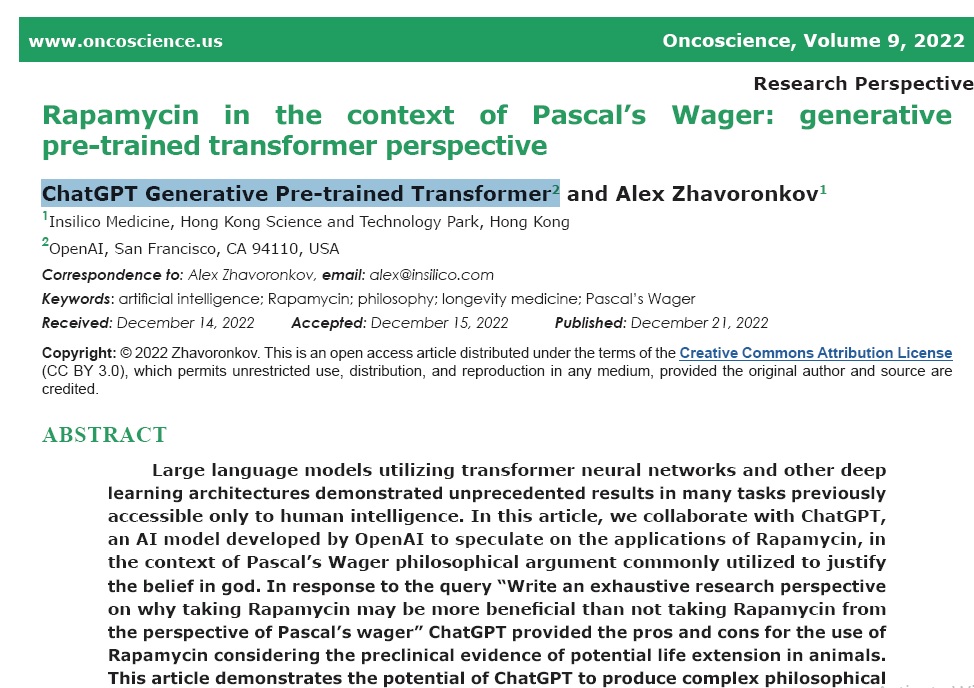
I had already talked about research in different terms before, but I couldn’t resist writing this post when I recently observed that a research journal had listed Chat GPT as the first author. It’s amazing how a machine can take on the role of an author and even have its work published in an academic journal.

Table of Contents

Chat GPT: First Author in Research Article

This paper is part of the “Research Perspective” section and was published on December 21, 2022, around the time when ChatGPT was first introduced and people were beginning to experiment with it through OpenAI. The author considered the genuine and authentic output generated by ChatGPT in response to their query about the applications of Rapamycin on this version-3. Based on this study, the author highlights the potential of ChatGPT in the abstract.

chatgpt research paper author


Chat GPT Authorship: Refused in Research Papers

It might come as a surprise, but ChatGPT itself refuses to accept authorship or involvement in any research paper. Therefore, it’s not acceptable for a human being to mention or consider a machine tool like ChatGPT as a first author. This issue raises concerns regarding conflicts of authorship. At present, ChatGPT’s contribution as a co-author or first author cannot be analyzed since it doesn’t have the ability to play such a role. As mentioned earlier, if any author takes help from ChatGPT to complete the research, they can acknowledge the source.

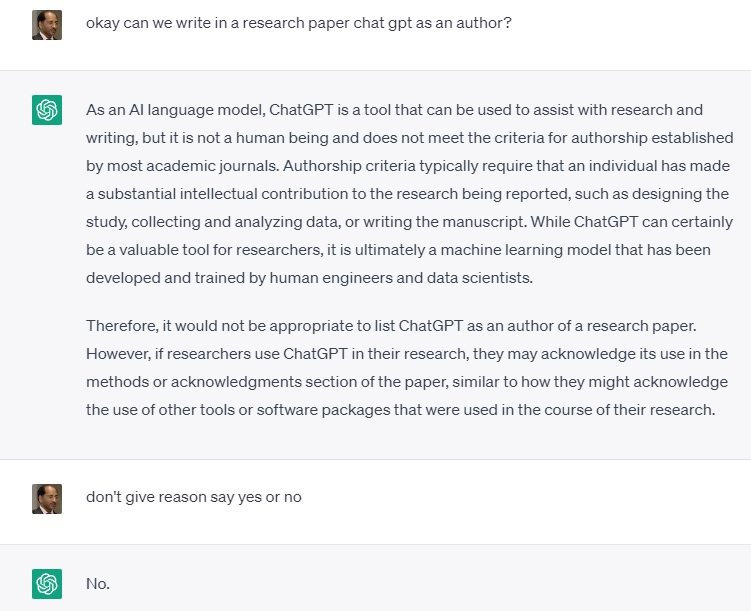
When I asked ChatGPT directly without any engineering prompts whether it could play a role as an author in a research paper, its response was negative. This clears the air about the research integrity of ChatGPT and resolves the matter of its involvement in authorship in any way.


chatgpt response2


After my direct inquiry with Chat GPT, it was made clear to me that it couldn’t be possible for Chat GPT to be listed as an author in a research paper. However, I have also observed another case where neither the source/tool was acknowledged nor considered as a co-author. Instead, the research article was published as a sole authorship, while the outcomes generated by Chat GPT were used as they were.

Chat GPT Generated Text: Full Research Paper

Not only is this article the first in this queue, but people are also blindly using ChatGPT without considering its impact. They are not concerned about the readers and the people in the knowledge society who rely on research journals as a reliable source of knowledge.

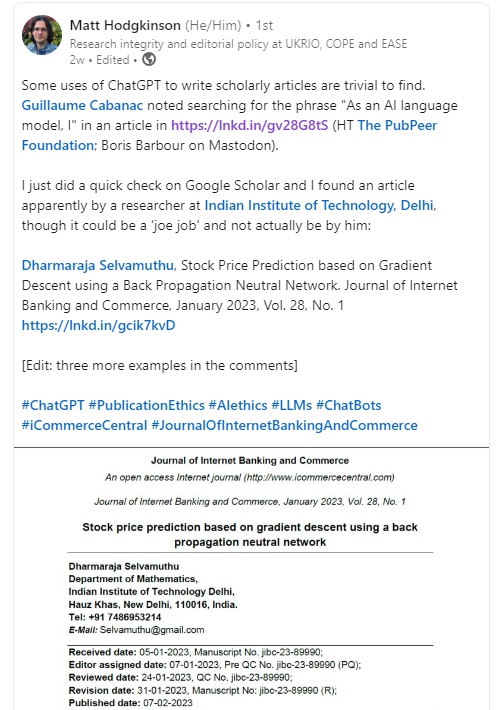
Recently, a professor from a top institute in Delhi published the ChatGPT output in a research journal. I am wondering about the state of mind of these so-called researchers. How could a senior professor do such a thing? What was the requirement for doing so, and how will that information contribute?

ChatGPT research output IITD
Source from Linkedin

People on social media are voicing their concerns about research integrity, but some researchers don’t seem to understand its importance due to personal reasons. Some are using research to increase the number of publications, assuming that having more research articles will make them more reputable researchers and their institutions more prestigious.

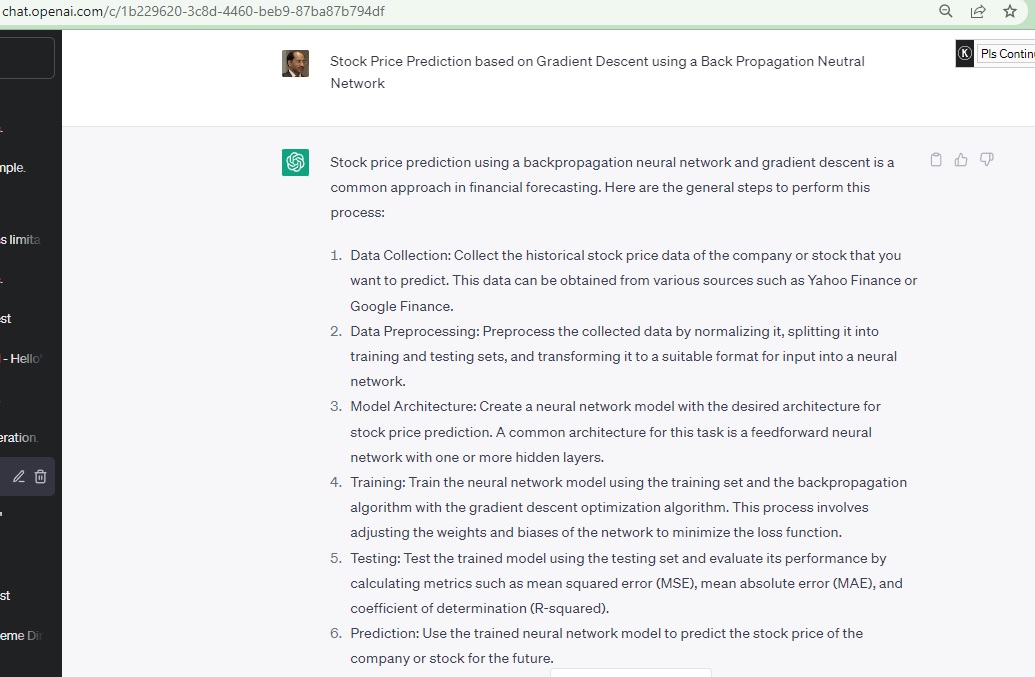
When I typed the title of the research article into ChatGpt to obtain the output, I was shocked to see that the output was the same as what was published in the research paper. How is this possible? Was it the tool’s fault or did someone simply copy the text from the source and not acknowledge it? It was shocking to me that the research paper was published as it was.


chat gpt research IITD2
Source Chat GPT

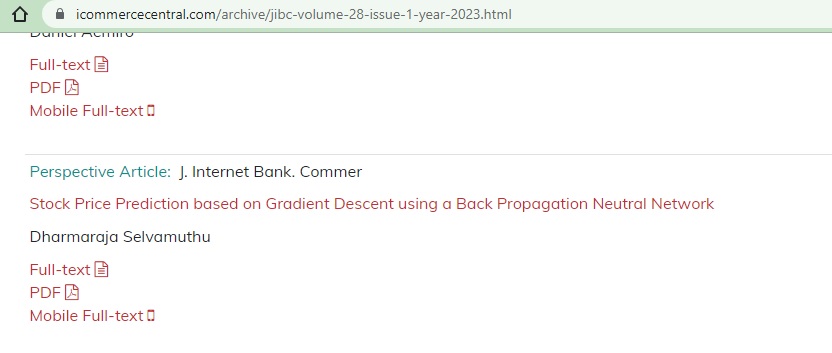
I understand the importance of research and publication ethics and the need to sensitize the scholarly community about it. I know that people who are at a lower scale and doing research may be reading lower category journals and trying to extract information from them. However, in such cases, it leaves questions in one’s mind about the authenticity and reliability of the information.


ChatGPT research output IITD4


Conclusion Chat GPT Authorship

In conclusion, it is important to understand why we are doing research or sharing information with the knowledge society. If the sole purpose is just to increase the number of publications, then knowingly or unknowingly, mistakes may be made. One can use Chat GPT to get information, but it should be reliable, authentic, and useful for the intended purpose. Unfortunately, in the cases mentioned above, researchers, especially senior ones, have used it in a negative way. Technology is meant to simplify problems, not create them. Therefore, it should be used in a true sense and effectively.

In the end, it is important to understand that a machine tool cannot be an author of a research paper. This is not limited to research papers but also textbooks or book chapters. One should avoid the copy-paste culture and write whatever they want to write in their own language and style.

Researchers and academicians should be aware of the facts and outcomes of such practices and their impact on the new generation and ultimately on the reputation of the country. Many people are working day and night to bring the truth in the form of science. It is important to appreciate their efforts and not diminish them by such practices or following bad shortcuts.

SHARE IT TO SENSITIZE THE KNOWLEDGE SOCIETY

What is your opinion on this issue? share your point.

NOTE: at the end I will say, it is not to defame any individual or Institution in any way, there are still people who are not following or not aware about to the research and publication ethics, follow the good practices.