Monday, 6 June 2022

How will people find your research?

 Source: https://libguides.mh.org.au/c.php?g=793803&p=6660634

The needle in the haystack


Over 800 000 citations are added to PubMed alone each year.

How will people find your research in this flood of material?  

  • Make your title work for you
  • Write a good abstract
  • Make the most of keywords
  • Think about people look for research
  • 'Reverse engineer' your own searching habits
  • Maintain your researcher profile
  • Consider open access options

Photo by Lucas Gallone on Unsplash

Title  

Your title will be searched by keyword searches, quickly scanned by readers for relevance and generally act as an ad for your paper.  infographic title optimization for scholarly publications

  • make it informative, attractive and to the point.
  • use words that describe the study and that people would search databases by
  • balance attractiveness with "aboutness"
  • avoid using sensationalist titles - academics and medical professionals tend to avoid them
  • search algorithms give more weight to title words - make sure critical terms are in the title


Infographic by Schilhan, Kaier, Lackner


Video - How to write a title for your research paper by Editage Insights.


Abstract   

Your abstract is the largest section that will be searched by keyword searches (most databases do not search full text). Make it count by including all entry points to your research. These may be alternative terminology, trial or drug names.

For help in writing a good abstract see the How to write a good abstract tab.


Keywords  

Database and search engines are extremely literal - they search for exactly what thy are asked. This means that if people use different spellings or terminology to you they may not find your paper.

  • Example. In PubMed:   leukemia    298 803 results

leukaemia   34 988   results

Use the author keywords options to address this. Attach terminology or spelling variants as keywords to appear in different searches.


How people search  

  • most searches are only a couple of terms
  • author names are commonly searched
  • in one study,  genes, proteins and disease were the next most searched after authors
  • acronyms are searched

Keep this in mind when writing your title, abstract and choosing keywords.

Think about when you were searching for literature on this topic - what did you do? What worked? Apply this to how people will find your paper.

Article - Increasing visibility and discoverability of scholarly publications with academic search engine optimization. UKSG insights 2021.


Researcher profile  

People search by author but this can be a difficult way to correctly identify individual researchers:

  • authors names can be presented in many different ways through the publication process
  • there may be many other people with the same or similar name.

Use an ORCID ID to create perpetual links to your research:

  • Medline and Embase index author ORCID ID's. If people search by this they will find all papers you have linked to your ID.
  • use your ORCID ID across platforms such as personal websites, ResearchGate, LinkedIn, funding applications etc to get credit for your work and allow more ways for it to be found.
  • provide your ID even if publishers do not ask for it.

Use platforms such as institutional websites, personal webpages, professional networking sites and social media to create a digital presence. It does not have to be blatantly self-promoting, just participating will allow more ways for people to find you and your work.

Article: Blowing Your Own Trumpet: How to Increase the Online Visibility of Your Publication? 2018


Open Access  

Research which is available open access (ie not behind a publishing pay wall) gets more views and is cited more.

  • consider what options your preferred journal has for open access
  • look at your publishing contract. What are your options for archiving or posting your paper?
    • you may be able to make the final authors version available
    • you may be able to make the final version available after an embargo period
    • you can usually directly distribute a certain number of copies of your paper
  • make the most of any institutional websites, repositories or other opportunities to store or display your work.


What about Google?

Google Scholar trawls institutional repositories, author websites and other websites with academic content. If your paper doesn’t appear, there are ways to assist Scholar find it:

  • have a bibliography online
  • upload your paper into your institution’s digital repository
  • if your institution’s repository is not crawled, you can ask Google Scholar to include it
  • if you have copyright permission, upload your paper into Research Gate or other network
  • add it yourself
    • sign into your google account , on the 3 line menu on the left in Google Scholar, choose Author Profile.
    • add your details. Google will ask if you have authored articles which it has found
    • if you have publications that don't appear in this list, you can add them manually.

10 steps to a good abstract

 Source: https://libguides.mh.org.au/c.php?g=793803&p=6660635

Clinical and Research Support

The abstract is your showcase. A good abstract provides visibility. This leads to citations, collaboration and impact

A bad abstract puts people off. Good research may go unread and unused.

10 steps to a good abstract

  1.   Write the abstract last

  2.   Write concise versions of the background and aim/hypothesis. No more than one or two sentences.

  3.   Select key phrases from your  methods section, but don't repeat the aim.

  4.   Select key phrases from the results and look for the concluding statement of paper.

  5.   Arrange words and phrases from steps 2-4 under appropriate headings.

  6.   Make sure the abstract does not contain new information, undefined abbreviations, unnecessary methods or reference citations

  7.   Remove unnecessary info and check flow of sentences

  8.   Check for consistency between abstract and paper ( by all authors)

  9.   Ask colleagues to read abstract - does it make sense? Could they understand your study? Does the writing flow? Are there typos?

  10.   Reread the journal instructions for abstracts to make sure it meets word count and style-format requirements. You don't want to waste  time re-submitting for minor changes that careful preparation could have avoided.

adapted from Mary Nishikawa

'Tips for writing an effective, marketable abstract'


Video - How to write an Abstract: Some useful tips by Editage Insights

Preparing for Submission - International Committee of Medical Journal Editors Recommendations

Infographic - how to optimise your abstract

Infographic from Schilhan L, Kaier C, Lackner K. Increasing visibility and discoverability of scholarly publications with academic search engine optimization. Insights. 2021;34(1):6. DOI: http://doi.org/10.1629/uksg.534

Methods for increasing visibility (and their acceptability) vary in each discipline.

 Source: https://instr.iastate.libguides.com/tenure/visibility

Promotion & Tenure Resource Guide

This guide is intended to provide resources useful to individuals who need to evaluate research and its impact. It includes journal acceptance rates, citation analysis, impact factors, journal rankings, creating publication lists, etc.

Ideas!

Methods for increasing visibility (and their acceptability) vary in each discipline.The following are merely suggestions/ideas to get you thinking:

  • Include publications in an Institutional Repository - such as the Digital Repository @ ISU - and provide full-text of it (if publisher allows).
  • Include publications in an online Subject Repository - such as AgEcon Search, arXiv.org, RePEc, SSRN, etc.
  • Publish in an Open Access journal or self-archive it (if publisher allows).
  • Publish/share data associated with your research - for more information see Data & Text Repositories guide.
  • Publish in an online journal with search features allowing users to find articles that cite it. For example, see "cited by" features in Highwire Press journal articles.
  • Share publications using social networking tools such as Mendeley, ResearchGate,twitter, SlideShare, figshare, blogs, etc.
  • Create an online presence utilizing tools such as ORCiD ID, Researcher ID, Google Scholar Citations profile, or LinkedIn and link to your profile on university webpages, vitae, and/or within email signatures.
  • List/link publications on personal websites or university webpages that are trawled by Google Scholar - specifically not behind a login screen such as that of WebCT, Blackboard, or Moodle.
  • List as recommended reading on a course website (but not buried behind a login).
  • Bone up on how to influence Google page rankings - Facebook shares, back links, and tweets are the top ways to increase page visibility in search engine result pages.
  • Keywords and abstracts play a vital role in researchers retrieving an article - especially for indexes or search engines that do not have the full-text of the article available. Be sure to identify numerous synonyms and use terms that you used in conducting your own literature review.
  • Publish thought-provoking, critical pieces or literature reviews - these traditionally have higher citation rates as do those dealing with hot topics.

For additional information specific to a given discipline, we recommend consulting senior faculty in your department.

Your Librarian

Contact:
Head, Research Services Dept.
150c Parks Library
Ames, IA 50011-2140
Phone: 515-294-5569

Search Engine Optimization for academic works

 Source: https://library.ucalgary.ca/guides/scholarlycommunication/promote

Search Engine Optimization for academic works

Academic search engine optimization can help your scholarly works stand out in a crowded online environment by ensuring that your article is indexed in major academic search engines such as Google Scholar and more.  The links below provide tips for articles and books.

Sharing functional links

The best kind of shareable link is one that will work provide stable, long term access to the final version of your work to the widest audience possible.

Publishing in an Open Access journal, or archiving your work in PRISM (our institutional repository), is a reliable way to provide a link that will work for everyone who might want to access your work.

If you are publishing with a journal that requires readers to purchase articles (either through subscriptions or pay-per-view), here are some tips to make your article more widely accessible:

  • Ask for an author link (variously called eprint links, share links, etc) that will allow you to share your article with a limited number of friends/colleagues, regardless of whether they have a subscription to that journal.
  • Most publishers will allow you to archive some version of your paper in PRISM.  The Author rights page provides more information on assessing publisher policies and negotiating for your rights.

Using social and professional networks

Let your networks know that you've published something new by posting it on social networks, academic networking sites, and your blog if you have one.  These sites are crawled by major search engines and may also provide "alerting" features to your network.  

Many publishers have specific tips and tools for promoting your work through social and media channels.

Related guide

Pre-publication steps for maximizing the visibility and impact of your research work

 Source: https://www.sciencegate.app/b/maximize-the-visibility-and-impact-of-your-research/

Pre-publication steps for maximizing the visibility and impact of your research work

Why looking for higher visibility for your paper?

  • Attract more audience for your article.
  • Have more impact in your field of research.
  • Get more citations.
  • Increase your scientific prestige and credibility.
  • Upgrade your university/institute ranking.

Universities ranking approaches assign a high share for the number of citations that university researchers’ publications receive. The table below indicates the share of the index associated with papers citations for some of the most famous university ranking approaches.

UNIVERSITY RANKING METHODOLOGYWeight of the index associated with papers citations
30%
40%
20%
20%

DON’T FORGET THAT YOUR PAPER QUALITY COMES FIRST.

Pre-publication steps:

Here are the steps that you should highly pay attention to, before publishing your article in order to get maximum impact and visibility.

1. Paper topic

Discover and find emerging topics for publication in your research area and take distance from declining topics.

Trending topics represent research areas with significant growth acceleration in recently published articles. Here are some online tools that can help you discover emerging topics in your research areas. You may refer to another of our posts for more information in this field.

2. Paper language

Select English as your paper language or at least provide your paper abstract in English.

Although English is not the native language of the majority of researchers, it is still the dominant language of the scientific community.

3. Paper Journal

Find the most suited and relevant journal for your manuscript.

Here are some useful tools by which you can find journals that could be best suited for publishing your scientific paper. Review the journal’s aims & scopes before deciding where to submit your paper.


Journal Finder

Journal Suggester

Journal Suggester

Journal Finder

Prioritize Open Access journals for your publication.

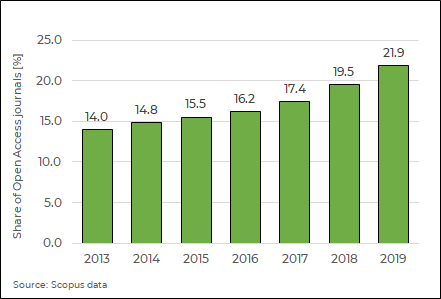
Open access journals tend to be cited more in comparison with non-open access ones. Publishing papers in open-access journals may boost up the citation count by up to 10% [1]. Obviously, a paper which is available on the Web can be read and indexed by the Web-based search engines so it will potentially obtain more readers and receive more citations.

Open vs non-open access

Scopus data indicates a growing trend for the ratio of existing Open Access journals to total journals.

Select journals with a higher impact, prestige, and disciplinary reputation (top-level journals).

Journal metrics help you to provide insight into journals quality and impact. Here is a list including the most famous journal metrics used for journal rankings:

  • Quartile (Q): Each subject category of journals is divided into four quartiles: Q1, Q2, Q3, Q4. Q1 is occupied by the top 25% of journals in the list; Q2 is occupied by journals in the 25 to 50% group; Q3 is occupied by journals in the 50 to 75% group and Q4 is occupied by journals in the 75 to 100% group. Quartile index is reported by Clarivate and Scopus in a different manner
  • Impact Factor (IF): The Impact Factor is the average number of times a paper in a particular journal is cited during the preceding two years. 5-Year Impact Factor is also calculated based on the publication data of the previous 5 years.
  • Eigen Vector: The Eigenfactor is calculated based on weighted citations to papers published within the previous 5 years. Citations are weighted according to the reputation of the citing journal.
  • h-Index: The h-index indicates the number of papers, h, that have been cited at least h times. GoogleScholar uses journals h5-index (h-index of only those of its papers that were published in the last five complete calendar years) as publication rankings in different categories and subcategories. The following table indicates the top-20 publications reported by GoogleScholar.

  • The SCImago Journal Rank (SJR): The SCImago Journal Rank (SJR) is calculated based on weighted citations in year X to papers published in the previous 3 years. Citations are weighted here by the prestige and reputation of the citing journal.

4. Paper content

DON’T FORGET THAT YOUR PAPER QUALITY COMES FIRST.

Choose the most appropriate type of article according to its content and pay attention to the citations in your research work

Notice that review papers mainly get more citations than other types of papers Refer to reliable resources with high citations.

Don’t forget that, referring to the sources with higher rank will give your paper more value and higher rank. Try to cite your own and your co-authors’ previous research documents in an appropriate manner.

Make your article easy to find

Implement SEO content strategy for your paper

More than 50% of traffic to publisher websites comes from Google, Google Scholar, and other search engines. Over 60000 Google searches are performed every second. Therefore, it is very important to take steps to help your paper rank higher on Google, Google Scholar, and other search engines. Search Engine Optimization (SEO) is a set of actions so search engines like Google show your paper at a higher ranking (pages) when someone searches for something related to your paper content. SEO has a general meaning and mostly applies to web pages. This article here is focused on Academic Search Engine Optimization (ASEO) which particularly deals with the optimization of scholarly documents for search engines. Most academic search engines do not index the full text of a document (like what Google Books does)  but instead index only the title and abstract. So, ASEO mostly deals with techniques that mostly focus on the article’s title and abstract.

In a search for the term “search engine optimization” a document entitled “Search engine optimization” would be ranked higher than the other one entitled “The role of search engine optimization in search marketing”.

It is to be noted that the citation counts of a document also play a major role in the ranking algorithm of Google Scholar.

Select the most important keywords that are relevant to your paper topic and use them in the right place. The most important places for the keywords are the title and abstract of your paper. Mention the keywords and their synonyms in the title and abstract of your paper frequently (but not as much as to irritate the readers). Note that search engines normally tend to dislike the repetition of keywords known as keyword stuffing.

Although you should use keywords that are consistent with your paper topics, try to select leading and trending keywords. Refer to the major papers similar to your paper topic and check the applied keywords and also take a look at popular keywords on Google Trends and the Google Adwords keywords tool.

Use your keywords throughout your article and let them flow naturally and contextually. Try to use the main keywords in headings, subheadings, and the captions of figures and tables.

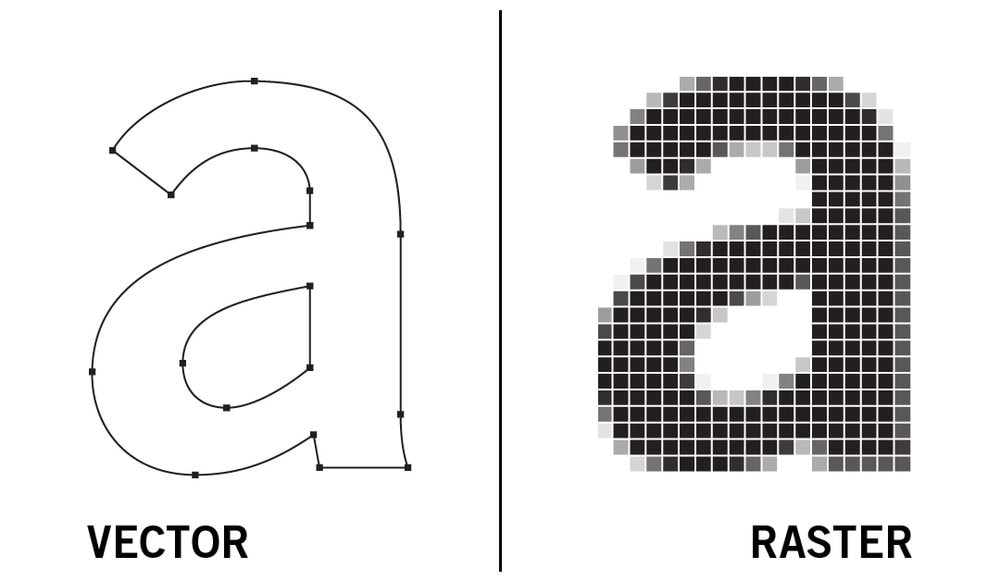
Use vector graphics instead of raster graphics for the images and tables of your paper so that the containing text can be machine-readable.

Select a descriptive and search-engine-friendly title for your paper

Use main and essential keywords in your paper title. The Search engines such as Google Scholar give the most weight to the search terms used in the title than other parts of the paper.

A short paper title is more attractive to search engines than a long one

As stated in the literature, papers with shorter titles receive more citations than papers with longer titles (the following figure) [2].

Although short titles are more attractive for most search engines, the longer title of papers covers more topics and keywords so it may give the chance to attract more audience. Therefore, it is necessary to make a conscious compromise in this regard.

Write an informative and standard abstract for your paper

Don’t forget that the paper abstract is the shop window attracting readers to your paper. Normally the first two sentences of a paper abstract are displayed in search engine results so make sure to include main phrases and essential keywords at the beginning part of your abstract. Repeat your main keywords and phrases 3–4 times throughout your paper abstract [3].

Create your own unique identifier as an author and choose a consistent format for your name and institutional affiliation

Create and use your unique identifier as an author in order to differentiate and distinguish your publications from that of all other researchers. You can freely get your ORCID identifier at https://orcid.org. Use a consistent format for your name and use it with your papers.

MAKE SURE YOU FOLLOW ALL GUIDES OF THIS ARTICLE TO GIVE YOUR RESEARCH WORKS THE BEST CHANCE OF BEING DISCOVERED.

References:

[1] McCabe, Mark J., and Christopher M. Snyder. “Does online availability increase citations? Theory and evidence from a panel of economics and business journals.” Review of Economics and Statistics 97.1 (2015): 144-165.

[2] Letchford, A., Moat, H. S., & Preis, T. The advantage of short paper titles. Royal Society Open Science, 2(8), (2015): 150266.

[3] https://www.wiley.com/legacy/wileyblackwell/pdf/SEOforAuthorsLINKSrev.pdf

How useful was this post?

Click on a star to rate it!


Average rating 5 / 5. Vote count: 2